
Featured Achievements
Key achievements
The Centre for Adolescent Rheumatology at UCL, UCLH and GOSH has achieved a lot over the past 10 years! Check out some of the highlights below.

Abundance of key immune cells may be influenced by oestrogen and XX chromosomes
Abundance of key immune cells may be influenced by oestrogen and XX chromosomes
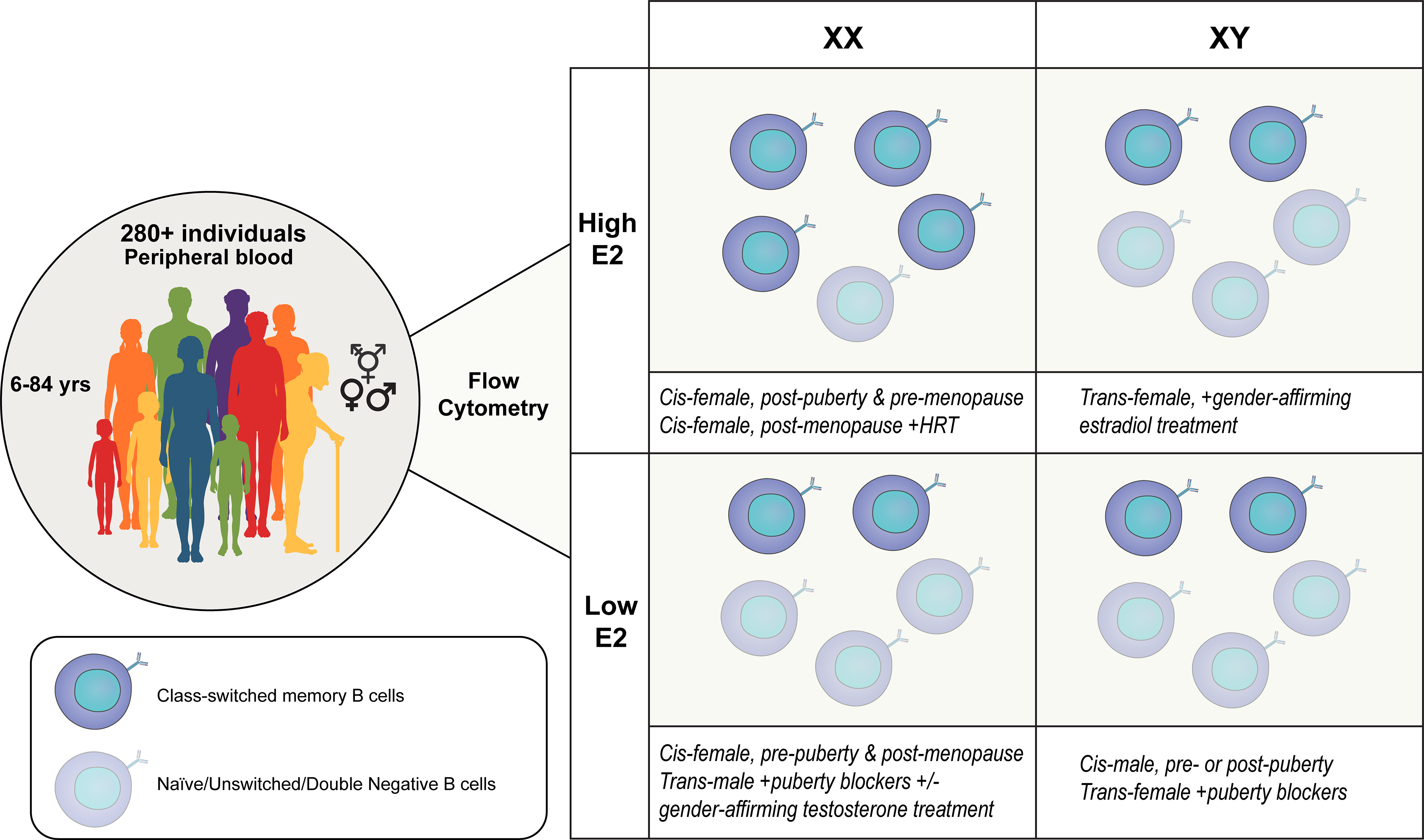
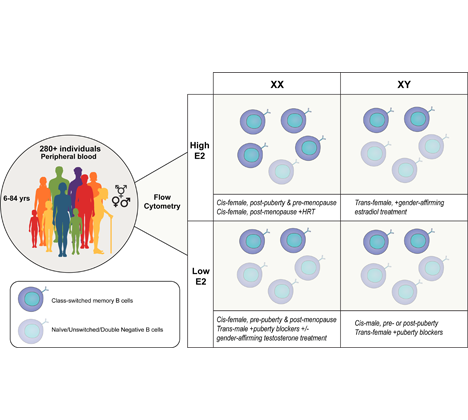
Centre research led by Professor Lizzy Rosser and Dr Hannah Peckham recently reported that women have a higher proportion of key immune cells between puberty and menopause, which may be linked to the sex hormone oestrogen and explain why they are less susceptible to certain infectious diseases than men.
In order to examine how hormones and biological sex influence the production of 31 different immune cell types, the team analysed blood samples from 283 individuals between the ages of six and 84 years.
Of these, 203 were cisgender1 females and cisgender males, including post-menopausal women receiving hormone replacement therapy (HRT). They also analysed samples from 80 transgender1 females and males receiving gender-affirming or puberty suppressing hormone treatments2.
The results indicated that cisgender females (XX chromosomal background) have higher levels of specific white blood cells, known as class-switched memory B cells, than cisgender males (XY chromosomal background).
Professor Coziana Ciurtin, principal investigator of the study, said:
“Our study has identified some evidence that oestrogen plays an important role in the abundance of class-switched memory B cells in females, but more research is required to fully understand the biological mechanisms at play. However, these findings could partially explain the sex differences we see in many infectious diseases, vaccine responses, and autoimmune disorders, and add to the growing evidence that sex and gender are critical factors to be considered in immunological studies.”
Read more about this work in UCL’s press release here. The full paper can be access here.
Using MRI tools to measure arthritis and improve care
Using MRI tools to measure arthritis and improve care
At the Centre, led by Professor Hall-Craggs and Dr Tim Bray, we created MRI imaging scan tools to measure arthritis in the growing spine and skeleton. These methods allow more precise, objective assessment of inflammation than the older ‘conventional’ MRI methods, and can reveal arthritis at places in the body that which may be missed by clinical examination.
Several of the new methods are now adopted as standard care at UCLH. These tools are helping to determine the best timing and type of treatment, ensuring that each patient gets the best care.
We are currently working on integrating these tools with other hospital systems and exploring the use of artificial intelligence algorithms within these tools. We are also working with researchers and doctors at other hospitals, with the ultimate goal of introducing our new methods across the NHS.
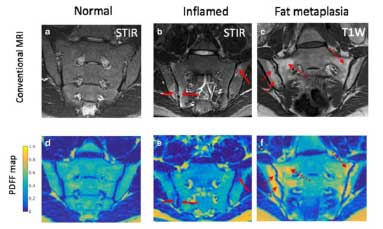
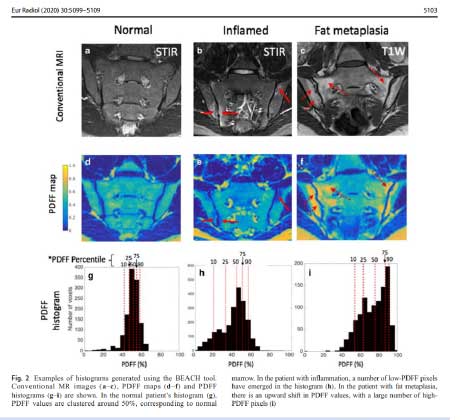
Figure: MRI imaging tools such as histographic analysis can help identify active inflammatory lesions. In particular using a method called ADC (apparent diffusion coefficient), the team showed that it is possible to differentiate patients with active inflammatory lesions from those without. Similarly, a method called proton density fat fraction (PDFF) can help differentiate patients with a chronic inflammatory lesion, from those without.
Hyperlink: https://www.ncbi.nlm.nih.gov/pmc/articles/PMC6915840/pdf/ART-71-594.pdf
https://www.ncbi.nlm.nih.gov/pmc/articles/PMC5811922/pdf/MRM-79-1031.pdf
Achievements
-
More Info
Abundance of key immune cells may be influenced by oestrogen and XX chromosomes
Abundance of key immune cells may be influenced by oestrogen and XX chromosomesCentre research led by Professor Lizzy Rosser and Dr Hannah Peckham recently reported that women have a higher proportion of key immune cells between puberty and menopause, which may be linked to the sex hormone oestrogen and explain why they are less susceptible to certain infectious diseases than men.
In order to examine how hormones and biological sex influence the production of 31 different immune cell types, the team analysed blood samples from 283 individuals between the ages of six and 84 years.
Of these, 203 were cisgender1 females and cisgender males, including post-menopausal women receiving hormone replacement therapy (HRT). They also analysed samples from 80 transgender1 females and males receiving gender-affirming or puberty suppressing hormone treatments2.
The results indicated that cisgender females (XX chromosomal background) have higher levels of specific white blood cells, known as class-switched memory B cells, than cisgender males (XY chromosomal background).
Professor Coziana Ciurtin, principal investigator of the study, said:
“Our study has identified some evidence that oestrogen plays an important role in the abundance of class-switched memory B cells in females, but more research is required to fully understand the biological mechanisms at play. However, these findings could partially explain the sex differences we see in many infectious diseases, vaccine responses, and autoimmune disorders, and add to the growing evidence that sex and gender are critical factors to be considered in immunological studies.”
Read more about this work in UCL’s press release here. The full paper can be access here.
-
More Info
Using MRI tools to measure arthritis and improve care
Using MRI tools to measure arthritis and improve careAt the Centre, led by Professor Hall-Craggs and Dr Tim Bray, we created MRI imaging scan tools to measure arthritis in the growing spine and skeleton. These methods allow more precise, objective assessment of inflammation than the older ‘conventional’ MRI methods, and can reveal arthritis at places in the body that which may be missed by clinical examination.
Several of the new methods are now adopted as standard care at UCLH. These tools are helping to determine the best timing and type of treatment, ensuring that each patient gets the best care.
We are currently working on integrating these tools with other hospital systems and exploring the use of artificial intelligence algorithms within these tools. We are also working with researchers and doctors at other hospitals, with the ultimate goal of introducing our new methods across the NHS.
Figure: MRI imaging tools such as histographic analysis can help identify active inflammatory lesions. In particular using a method called ADC (apparent diffusion coefficient), the team showed that it is possible to differentiate patients with active inflammatory lesions from those without. Similarly, a method called proton density fat fraction (PDFF) can help differentiate patients with a chronic inflammatory lesion, from those without.
Hyperlink: https://www.ncbi.nlm.nih.gov/pmc/articles/PMC6915840/pdf/ART-71-594.pdf
https://www.ncbi.nlm.nih.gov/pmc/articles/PMC5811922/pdf/MRM-79-1031.pdf
-
More Info

Using new techniques in understanding JSLE and Sjogren’s syndrome.
Using new techniques in understanding JSLE and Sjogren’s syndrome.Using a Multi-omic analysis technique, our Centre has shown that high levels of the protein called ApoB:ApoA1 is a possible indicator of increased cardio-metabolic risk and long term complications of childhood onset lupus ( also called JSLE). Knowing about this marker means that we can help identify patients that require increased disease monitoring and advise on lifestyle changes (Robinson et al. 2021, EBioMedicine) (hyperlink)
https://www.thelancet.com/journals/ebiom/article/PIIS2352-3964(21)00496-5/fulltext
We’ve also discovered an immune cell toolkit that may be useful for differentiating, with high accuracy, the immune profiles of patients with Sjogren’s syndrome and lupus which will help us improve our treatment for patients (Martin-Gutierrez et al., 2021 A&R) – hyperlink
https://pubmed.ncbi.nlm.nih.gov/33645922/
We are also the first to report an in-depth analysis of immune cells and their composition, in patients with juvenile-onset SLE. Using Machine-learning methods, we identified a juvenile-onset SLE immune cell signature that allowed us to group patients according to their disease trajectory (Robinson et al, 2020, Lancet Rheum) – hyperlink
-
More Info
The Adolescent Biobank and our linked studies
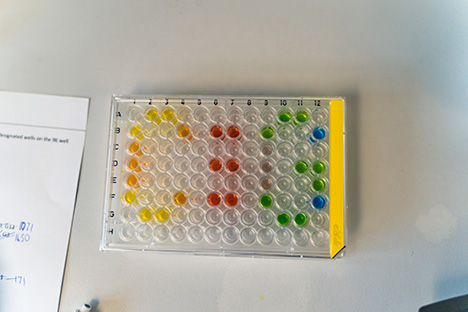
The Adolescent Biobank and our linked studiesWorking with young people (aged from 10 -25) from across our clinics we have established a unique Biobank of samples, and linked data from young people with arthritis, lupus, myositis and related conditions, young people with gender dysphoria and healthy control young people.
This Biobank has underpinned many unique and exciting new studies on how puberty and sex impact on immune responses, both in the conditions our patients have and also in related studies. For example when the COVID pandemic started, we were able to contribute very quickly to a novel study where immune responses to previous viruses were analysed in relation to the response to the COVID-19 virus. Our contribution meant that age, puberty and sex could be taken into account in this important work (make links to URLs of Ng et al https://pubmed.ncbi.nlm.nih.gov/33159009/ and Deakin et al 2021 https://pubmed.ncbi.nlm.nih.gov/34414384/
-
More Info
Abundance of key immune cells may be influenced by oestrogen and XX chromosomes
-
More Info
Using MRI tools to measure arthritis and improve care
-
More Info
Using new techniques in understanding JSLE and Sjogren’s syndrome.
-
More Info
The Adolescent Biobank and our linked studies
Centre research led by Professor Lizzy Rosser and Dr Hannah Peckham recently reported that women have a higher proportion of key immune cells between puberty and menopause, which may be linked to the sex hormone oestrogen and explain why they are less susceptible to certain infectious diseases than men.
In order to examine how hormones and biological sex influence the production of 31 different immune cell types, the team analysed blood samples from 283 individuals between the ages of six and 84 years.
Of these, 203 were cisgender1 females and cisgender males, including post-menopausal women receiving hormone replacement therapy (HRT). They also analysed samples from 80 transgender1 females and males receiving gender-affirming or puberty suppressing hormone treatments2.
The results indicated that cisgender females (XX chromosomal background) have higher levels of specific white blood cells, known as class-switched memory B cells, than cisgender males (XY chromosomal background).
Professor Coziana Ciurtin, principal investigator of the study, said:
“Our study has identified some evidence that oestrogen plays an important role in the abundance of class-switched memory B cells in females, but more research is required to fully understand the biological mechanisms at play. However, these findings could partially explain the sex differences we see in many infectious diseases, vaccine responses, and autoimmune disorders, and add to the growing evidence that sex and gender are critical factors to be considered in immunological studies.”
Read more about this work in UCL’s press release here. The full paper can be access here.
At the Centre, led by Professor Hall-Craggs and Dr Tim Bray, we created MRI imaging scan tools to measure arthritis in the growing spine and skeleton. These methods allow more precise, objective assessment of inflammation than the older ‘conventional’ MRI methods, and can reveal arthritis at places in the body that which may be missed by clinical examination.
Several of the new methods are now adopted as standard care at UCLH. These tools are helping to determine the best timing and type of treatment, ensuring that each patient gets the best care.
We are currently working on integrating these tools with other hospital systems and exploring the use of artificial intelligence algorithms within these tools. We are also working with researchers and doctors at other hospitals, with the ultimate goal of introducing our new methods across the NHS.
Figure: MRI imaging tools such as histographic analysis can help identify active inflammatory lesions. In particular using a method called ADC (apparent diffusion coefficient), the team showed that it is possible to differentiate patients with active inflammatory lesions from those without. Similarly, a method called proton density fat fraction (PDFF) can help differentiate patients with a chronic inflammatory lesion, from those without.
Hyperlink: https://www.ncbi.nlm.nih.gov/pmc/articles/PMC6915840/pdf/ART-71-594.pdf
https://www.ncbi.nlm.nih.gov/pmc/articles/PMC5811922/pdf/MRM-79-1031.pdf
Using a Multi-omic analysis technique, our Centre has shown that high levels of the protein called ApoB:ApoA1 is a possible indicator of increased cardio-metabolic risk and long term complications of childhood onset lupus ( also called JSLE). Knowing about this marker means that we can help identify patients that require increased disease monitoring and advise on lifestyle changes (Robinson et al. 2021, EBioMedicine) (hyperlink)
https://www.thelancet.com/journals/ebiom/article/PIIS2352-3964(21)00496-5/fulltext
We’ve also discovered an immune cell toolkit that may be useful for differentiating, with high accuracy, the immune profiles of patients with Sjogren’s syndrome and lupus which will help us improve our treatment for patients (Martin-Gutierrez et al., 2021 A&R) – hyperlink
https://pubmed.ncbi.nlm.nih.gov/33645922/
We are also the first to report an in-depth analysis of immune cells and their composition, in patients with juvenile-onset SLE. Using Machine-learning methods, we identified a juvenile-onset SLE immune cell signature that allowed us to group patients according to their disease trajectory (Robinson et al, 2020, Lancet Rheum) – hyperlink
Working with young people (aged from 10 -25) from across our clinics we have established a unique Biobank of samples, and linked data from young people with arthritis, lupus, myositis and related conditions, young people with gender dysphoria and healthy control young people.
This Biobank has underpinned many unique and exciting new studies on how puberty and sex impact on immune responses, both in the conditions our patients have and also in related studies. For example when the COVID pandemic started, we were able to contribute very quickly to a novel study where immune responses to previous viruses were analysed in relation to the response to the COVID-19 virus. Our contribution meant that age, puberty and sex could be taken into account in this important work (make links to URLs of Ng et al https://pubmed.ncbi.nlm.nih.gov/33159009/ and Deakin et al 2021 https://pubmed.ncbi.nlm.nih.gov/34414384/


56 years, 9 months ago